

Back to the Classics: The Treatise On Cold Damage and its legacy in Kampo medicine
Nigel Dawes, MA, LAc
A Workshop in Santa Fe, NM
Fort Marcy Hotel Suites - 321 Kearny Ave, Santa Fe
February 6-7, 2027
CEU Information: 15 Continuing Education Credits pending with NCCAOM, TX, and CA.
Register Here
Program Description
The “Treatise on Cold Damage”, the Sho Kan Ron 傷寒論 (Ch: Shäng hán lùn) and its sister text the Kin Ki Yo Ryaku 金匱要略 (Ch: Jīn Guì Yào Lǜe) by Zhāng Zhòngjǐng張仲景 (150–219) are generally considered as the primary classical Chinese source texts to have influenced the development of Kampō Medicine from their early importation into Japan in the 12th c. right up to the present day. It remains the case after 1500 years of integration of Chinese Medicine into Japan that at least 75% of formulas commonly used in Kampō practice today derive from those texts.
Yet, not only has the original text of the Treatise been lost to posterity, with competing versions emerging over the centuries in China, but in the case of Japan (which originally adopted the Song dynasty version), the Treatise not only enjoyed a major revival, in particular during the Edo period (1603–1867), but was appropriated as the primary source of inspiration for the Classical School or ‘Ancient Formulas Current’ (kohōha 古方派) that developed in late Edo. From the school’s founder, Gotō Konzan 後藤艮山 (1659–1733), to Kagawa Shuan 香川修庵 (1683–1755) and Yamawaki Tōyō 山脇 東洋 (1705–1762) and finally (Yamawaki’s student), Yoshimasu Tōdō 吉益東洞 (1702–1773), successive generations of kohōha doctors exclusively drew inspiration from the Treatise, gradually rejecting some of the foundational doctrines of Chinese Medicine (as articulated in such classics as the Yellow Emperor’s Inner Canon (Huángdì Nèijīng黄帝内経) and preferring instead to return to what they saw as the essence of the medical styles of Chinese antiquity which in their estimation were based on practice, not abstract theory.
Thus emerged the doctrine of “Proof” or Shō 証 (Ch: Zhèng) in which clinical experience or evidence became the litmus test for the effectiveness of a formula (shinshi jikken 親試実験). Tōdō in particular re-examined the entire lexicon of classical formulas in the light of their concrete symptomatic manifestation and emphasized the most concrete of all the diagnostic practices of the time – Abdominal diagnosis 腹診 Fukushin – making it the mainstay of his redefined clinical narrative attached to each and every formula, thus rendering the formula itself the primary diagnostic indicator as well as the treatment method. This matching of the method (formula) directly with the patient presentation lies at the heart of Kampō practice to this day.
In this workshop we will examine not only the unique clinical narratives for many of the most common classical formulae as they were re-defined by late Edo Kampō doctors, but also consider their respective place within the landscape and architecture of the Treatise itself. We will define the six stages in practical anatomical, physiological and pathological terms and consider not only the formulas that derive from the text itself, but also multiple commonly used formulas from other periods of both Chinese and Japanese history in terms of how they find a place within this paradigm, despite being written long after the source text itself.
There will, as always, be a practical component to the workshop with hands-on palpation of the abdomen in relation to the identification of formulas from all 6 stages.
In this workshop, you will learn to relate to formulas old and new through the lens of the Six Stages and come to recognize their “stories” through the living, breathing clinical evidence that defines them.
Cost
Students and Professionals: $475 $450 Early Bird until November 1, 2026
Cancellation Policy
• For cancellations made on or before 28 days before the start of the series – full refund
• For cancellations made on or after 27 days before the start of the series -No Refund
*Credit card convenience fees may be non-refundable
Please note: HDHS does not offer payment plans. However, PayPal, our processor, has options available that may suit some participants’ needs. See PayPal for details.
Eligibility:
Licensed Acupuncture Practitioners
Licensed practitioners of Traditional Chinese Medicine who wish to improve and broaden their existing herbal knowledge and practical diagnostic skills
Current Students of Traditional Chinese Medicine (in their final year)
Naturopathic Doctors and Herbal Practitioners from other traditions
Licensed Shiatsu, Tui Na, Massage or other bodywork Practitioners
MD, DO, NP, Chiropractors & other Allied Health Practitioners
Schedule
Saturday, February 6
Brief History of the Treatise
The architecture and landscape of the Treatise
Methods of six-stage diagnosis
Fukushin practice
Sunday, February 7
Treatment according to the Treatise in the Kampo tradition
Fukushin practice
9:00am-05:30pm with a 60-minute lunch break
About the Presenter
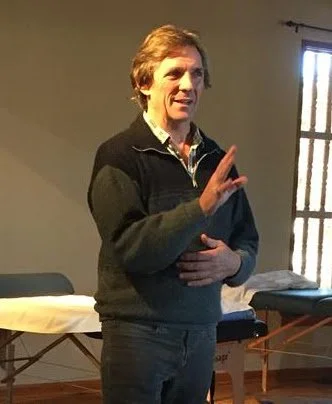
Nigel Dawes has been practicing and teaching Oriental Medicine for 40 years. He lived and studied in Japan for 5 years followed by hospital internships in China before returning to the UK where he opened a practice and founded his own Shiatsu school in 1987. He moved to the US in 1993 and has been involved variously in undergraduate and graduate OM education, higher education administration and political work in the field, clinical practice and publications including numerous articles, two books on Shiatsu, and two books on Kampo. He has served on faculty at both Pacific College of Oriental Medicine and Tristate College of Acupuncture and is the founder and director of the New York Kampo Institute (NYKI) whose mission, through its Kampo Fellowship, is to disseminate the teaching and practice of Japanese traditional medicine in the US and internationally. Its flagship program, the Kampo Internship, is an 8-module, 2-year training in Kampo Herbal Medicine. Nigel lives and practices in New York.